
You eat a meal and within an hour your waistband is tighter, your stomach is visibly bigger and an uncomfortable pressure begins to build in your abdomen.
Could be gluten?
For some, reducing or cutting out gluten can bring a huge relief from bloating. However, gluten is not always the culprit every time the stomach feels swollen. There are several components of wheat foods that can influence digestion, and knowing the difference can help you make healthier choices without unnecessarily restricting your diet.

Bloating and digestive discomfort can sometimes be influenced by what we eat and how we care for our overall wellbeing. A balanced approach to nutrition is one of the areas explored in Thriving Through Wellness: Your Path to a Balanced Life.
What Exactly Is Gluten?
Gluten is a group of proteins naturally found in:
- Wheat
- Barley
- Rye
- Triticale, a cross between wheat and rye
It helps bread hold its shape and gives dough its familiar stretchy texture. Gluten may also appear in sauces, soups, salad dressings, cereals, processed meats, and other packaged foods.
Most people can digest gluten without difficulty. For others, however, eating gluten-containing foods may lead to bloating, abdominal discomfort, diarrhea, constipation, fatigue, or other symptoms.
Why Might Gluten-Containing Foods Cause Bloating?
Bloating occurs when gas, digestive contents, or fluid causes the abdomen to feel full, tight, or swollen. The problem may become noticeable after eating bread, pasta, pastries, pizza, or cereal, but the reason is not always straightforward.
Several conditions could explain the reaction.
1. Celiac Disease
Celiac disease is an autoimmune disorder in which consuming gluten causes the immune system to attack and damage the small intestine.
Symptoms can include:
- Abdominal bloating
- Gas
- Diarrhea or constipation
- Nausea
- Abdominal pain
- Fatigue
- Unexplained weight loss
- Nutrient deficiencies
- An itchy, blistering skin rash
For someone with celiac disease, following a strict gluten-free diet is medically necessary—not simply a lifestyle preference. Removing gluten can relieve symptoms and allow the small intestine to heal.
If you suspect celiac disease, speak with your healthcare provider before eliminating gluten. Starting a gluten-free diet too early can affect the accuracy of diagnostic testing. The National Institute of Diabetes and Digestive and Kidney Diseases recommends being tested while gluten is still part of your diet.
2. Non-Celiac Gluten Sensitivity
Some people experience bloating, abdominal pain, fatigue, headaches, or changes in bowel habits after consuming gluten, even though they do not have celiac disease or a wheat allergy.
This is sometimes described as non-celiac gluten sensitivity. There is no single test that confirms it, so a healthcare professional may first need to rule out celiac disease, wheat allergy, and other digestive conditions.
3. Wheat Fructans May Be the Real Trigger
Here is where the issue becomes more interesting: a person may blame gluten when another part of wheat is causing the discomfort.
Wheat contains fermentable carbohydrates called fructans. Fructans belong to a group of carbohydrates known as FODMAPs, which can be difficult for some people, especially those with irritable bowel syndrome, to absorb properly.
When these carbohydrates reach the large intestine, gut bacteria break them down and produce gas. This can lead to bloating, pressure, cramping, and changes in bowel habits.
According to Monash University’s FODMAP researchers, fructans rather than gluten may trigger symptoms in many people with irritable bowel syndrome. This helps explain why someone might feel better after cutting back on bread and pasta even though gluten itself was not the problem.
Can Eating Less Gluten Flatten Your Stomach?
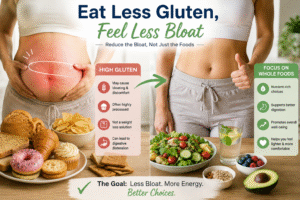
Reducing gluten-containing foods may decrease abdominal swelling if those foods are contributing to your digestive symptoms. As the bloating subsides, your stomach may look and feel flatter.
However, this is a reduction in digestive distension, not necessarily a loss of abdominal fat.
A gluten-free diet is not automatically a weight-loss diet. Gluten-free cookies, cakes, crackers, and snack foods can still be high in sugar, fat, and calories. Some may also contain less fiber than their gluten-containing alternatives.
The real benefit may come from replacing heavily processed foods with simpler, nutrient-rich choices rather than from avoiding gluten alone.
A Sensible Way to Investigate Your Symptoms
If you frequently feel bloated after meals, avoid removing several food groups at once. Doing so can make it difficult to identify the true trigger.
Instead, consider these steps.
1. Keep a Food and Symptom Journal
For one or two weeks, record:
- What you eat and drink
- Approximate portion sizes
- When bloating begins
- Other symptoms, such as pain, gas, constipation, or diarrhea
- Stress levels
- Sleep quality
- Menstrual or hormonal changes, if applicable
A journal may reveal that symptoms occur after certain foods, large meals, carbonated drinks, dairy products, onions, garlic, artificial sweeteners, or other triggers, not just gluten.
The NIDDK notes that a food and symptom diary can help a doctor or dietitian identify foods associated with excess gas.
2. Speak With a Healthcare Professional
Before beginning a strict gluten-free diet, ask whether testing for celiac disease or wheat allergy is appropriate.
This is especially important if you have:
- Persistent diarrhea or constipation
- Unexplained weight loss
- Anemia
- Frequent abdominal pain
- Ongoing fatigue
- A family history of celiac disease
- Blood in your stool
- Vomiting
- Symptoms that wake you at night
Severe or persistent bloating should not be self-diagnosed as gluten sensitivity.
3. Try a Supervised Elimination and Reintroduction
Once celiac disease and wheat allergy have been addressed, a doctor or registered dietitian may recommend temporarily removing certain foods and carefully reintroducing them.
Reintroduction is important. If symptoms return consistently after a particular food is restored, that pattern provides more useful information than permanently avoiding several foods without testing them individually.
A low-FODMAP eating plan may sometimes be recommended for people with IBS, but it is a short-term process followed by careful food reintroduction, not a permanently restrictive diet.
Naturally Gluten-Free Foods to Enjoy
If you need or choose to reduce gluten, build meals around naturally gluten-free whole foods, including:
- Fresh fruits and vegetables
- Eggs
- Fish, poultry, and unprocessed meat
- Rice
- Quinoa
- Potatoes and sweet potatoes
- Corn
- Certified gluten-free oats
- Seeds and tolerated nuts
- Plain yogurt or dairy-free alternatives, if tolerated
Check labels carefully because sauces, seasonings, soups, and processed foods may contain unexpected gluten.
People with diagnosed celiac disease must also prevent cross-contact between gluten-free foods and foods containing wheat, barley, or rye.
Do Not Forget the Nutrients
Removing bread, cereals, and other grains without suitable replacements may reduce your intake of:
- Fiber
- Iron
- Calcium
- B vitamins
- Other important nutrients
A poorly planned gluten-free diet may worsen constipation and digestive discomfort rather than improve it. Choosing whole foods and working with a registered dietitian can help you maintain a balanced diet.
Other Everyday Causes of Bloating
Even if reducing gluten helps, it is worth considering other possible contributors. Bloating can also result from:
- Eating too quickly
- Swallowing excess air
- Drinking carbonated beverages
- Constipation
- Eating very large meals
- Lactose intolerance
- High-fat meals
- Certain fermentable carbohydrates
- Hormonal changes
- Stress and anxiety
- Irritable bowel syndrome
- Other digestive conditions
Occasional bloating is common, but persistent or painful bloating deserves medical attention.
The Bottom Line
If you have celiac disease , non-celiac gluten sensitivity or difficulty digesting foods made from wheat , eating less gluten may help reduce bloating and make your stomach look flatter .
But gluten is not the enemy of every stomach.
In some cases it could be fructans in wheat or some other completely different dietary or medical issue. It’s better to get to the bottom of your symptoms than to just blame gluten for bloating.
Listen to your body, look for patterns and consult with a professional before you go on any restrictions. The goal isn’t just to get rid of more foods. It’s about finding what your body can handle comfortably while eating in a nourishing, satisfying and sustainable way.

Medical disclaimer: This article is intended for general educational purposes and is not a substitute for diagnosis or individualized medical advice. Consult a qualified healthcare professional regarding persistent digestive symptoms or before beginning a restrictive diet.
Better digestion starts with understanding what works for your body. If you’d like more practical wellness strategies, you can explore Thriving Through Wellness.