
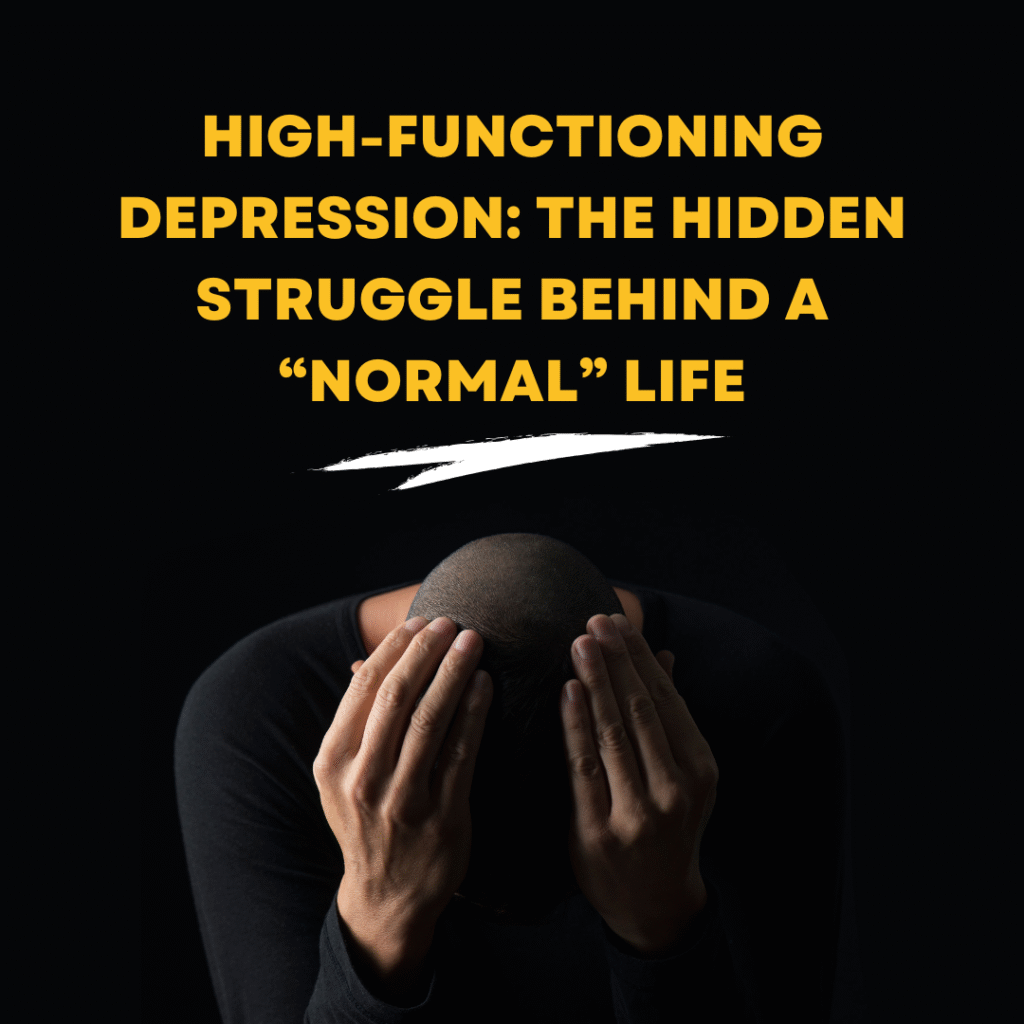
Introduction: The depression no one notices
Some depressed individuals don’t spend their entire day in bed.
Plans are not canceled. They don’t appear to be depressed.
They get up, put on their clothes, go to work, look after others, respond to emails, smile politely, and carry on. Additionally, they are internally worn out in ways that sleep cannot alleviate.
This form of depression is often overlooked. It is known as high-functioning depression. This is because everything seems to be “fine” on the surface. It is often overlooked, misunderstood, and sadly, dismissed.
The signs of this form of depression are subtle. It whispers. This is why many people have been living with it for years without ever realizing that they are more than just “tired,” “unmotivated,” or “bad at coping.”
Talking about the depression that no one sees is the first step towards awareness of mental health.

As we talk about the quiet weight of high-functioning depression, I’ll be drawing from the same gentle reset framework inside The Wellness Reset System — created for those who feel overwhelmed but keep pushing through.
What high-functioning depression looks like
Although it isn’t a recognized medical diagnosis, high-functioning depression is a term used to characterize people who meet many of the criteria for depression but continue to carry out their daily obligations.
From the outside, they may appear:
- Reliable
- Productive
- Put-together
- Successful
- Social
- Emotionally stable
From the inside, it often feels like:
- Constant emotional fatigue
- Feeling numb rather than sad
- Living on autopilot
- A quiet sense of emptiness
- Feeling disconnected from joy
Many people with high-functioning depression say things like:
- “I don’t feel terrible… I just don’t feel good.”
- “I’m doing everything I’m supposed to do, but I feel hollow.”
- “I keep going because I don’t know how to stop.”
This is why hidden depression signs are so easy to miss — by others and by the person experiencing them.
Why it often goes undiagnosed
For a number of reasons, high-functioning depression is often undiagnosed.
1. Pain is concealed by productivity:
Depression is frequently linked to a lack of functioning. Even one’s own emotional suffering is minimized when one is still accomplishing objectives, fulfilling deadlines, and taking care of others.
2. Expectations that are internalized
Many people think that;
- “I shouldn’t complain if I can still accomplish my goals.”
- “It’s worse for other people.”
- “I’m just being weak.”
This kind of thinking keeps people quiet.
3. Anxiety about not being taken seriously
People who suffer from high-functioning depression frequently fear that if they speak up, they will be told;
- “But you seem fine.”
- “You always have such strength.”
- “You don’t appear to be depressed.”
So they give up trying to explain.
4. Chronic stress normalized as “life”
In a culture that glorifies hustle, burnout, and constant output, emotional exhaustion is treated as normal — until it becomes dangerous.

If you’re used to holding everything together while struggling internally, a slow, structured reset can help you reconnect safely. That’s exactly what The Wellness Reset System is designed to support.
Emotional and physical symptoms
High-functioning depression isn’t just emotional — it often shows up physically too.
Emotional symptoms may include:
- Persistent low mood without dramatic sadness
- Irritability or emotional flatness
- Loss of interest in things once enjoyed
- Feeling disconnected from others
- Excessive self-criticism
- Difficulty experiencing joy, even during “good” moments
Physical symptoms may include:
- Chronic fatigue
- Sleep disturbances (sleeping too much or too little)
- Headaches or muscle tension
- Digestive issues
- Changes in appetite
- Frequent illness due to weakened immunity
Because these symptoms develop gradually, they’re often brushed off as stress, aging, or lifestyle issues rather than mental health concerns.
The risk associated with “pushing through”
The notion that strength equates to endurance is among the most damaging ideas surrounding high-functioning depression. Resilience is important, but it is not the same as continuously enduring emotional suffering without assistance. It’s in survival mode.
This may eventually result in:
- Extreme burnout
- Disorders of anxiety
- Depression getting worse
- Emotional collapses that seem abrupt but aren’t
- A higher chance of substance abuse
- Identity loss that goes beyond productivity
Until their body or mind compels them to stop, many people are unaware of how much they are struggling.
Acknowledging the difference between functioning and flourishing is a key component of mental health awareness.

How to support yourself (and others)
If this sounds like you
Start by gently acknowledging your experience. You don’t need a dramatic collapse to justify asking for help.
You can:
- Talk to a mental health professional, even if you’re “not sure it’s bad enough.”
- Journal honestly — without editing or minimizing
- Set boundaries around rest, not just work
- Practice self-compassion instead of self-discipline when you’re struggling
- Remind yourself that needing support does not erase your strength
Healing doesn’t require falling apart. It requires honesty.
If you see someone else exhibiting this
Fixing is not the same as support.
It implies:
- Listening without downplaying
- Believing them despite the fact that they “seem fine.”
- Steer clear of expressions like “just stay positive.”
- Encouragement of assistance without coercion
- Regularly checking in rather than just once
Those who require permission to rest are sometimes the strongest.
Small daily mental health practices
You don’t have to overhaul your life to support your mental health. Small, consistent practices can make a meaningful difference.
Try incorporating one or two of these:
- Emotional check-ins: Ask yourself daily, “How am I really feeling?”
- Nervous system resets: Deep breathing, short walks, or gentle stretching
- Reduced self-judgment: Replace “I should be doing more” with “I’m doing what I can today.”
- Moments of presence: Pause and notice something grounding — sound, texture, warmth
- Creative expression: Writing, music, or art without productivity goals
These practices don’t replace professional help — but they help you stay connected to yourself instead of disappearing into performance.

Conclusion: Asking for assistance doesn’t require you to break down.
Silence is ideal for high-functioning depression.
It indicates that you’re not exerting “enough” effort. That you ought to feel thankful. That since you’re still standing, you don’t merit assistance.
However, being aware of mental health issues entails realizing this:
- Asking for assistance doesn’t require you to collapse.
- You don’t need to demonstrate your suffering.
- To be strong, you don’t have to endure silent suffering.
You are not weak for feeling this way, and you are not alone if you appear to be smiling on the outside but are having internal struggles. Assistance is not a failure. It’s a step away from merely surviving and toward living.
You don’t have to fall apart to deserve support. If you’re ready to care for yourself gently instead of constantly coping, you can explore The Wellness Reset System.