
For a long time, burnout was seen as an indication of personal failure. The answer was simple: if you were consistently behind, emotionally flat, exhausted, or distracted, you weren’t working hard enough.
But burnout is unrelated to laziness. It happens when emotional stress is ignored, sleep is postponed for a long time, and “pushing through” turns into a habit rather than a transient need.
Burnout is a gradual process. Silently, it builds up. It develops in the background as you keep showing up, managing responsibilities, fulfilling commitments, and making promises to yourself that you’ll take a break once things calm down.

The Quiet Forms Burnout Often Takes
Burnout doesn’t always look like total collapse. In fact, many people experiencing burnout are still functioning which is why it goes unnoticed for so long.
It can look like:
- Waking up tired no matter how much you sleep
- Feeling emotionally detached from things you once cared about
- Becoming easily irritated or overwhelmed by small tasks
- Losing motivation but still forcing productivity
- Struggling to concentrate or make decisions
- Feeling like you’re constantly “behind” in life
These signs are often minimized or normalized. But they’re not character flaws — they’re signals.

Why Pushing Harder Eventually Stops Working
Increasing effort is a common reaction to low energy, greater self-control, tighter schedules, greater standards. However, excessive stress without recovery is what leads to burnout rather than a lack of structure.
Adding more demands won’t bring your nervous system back into balance when it’s already overworked. It generates opposition. Intensity is not the source of restoration. It originates with safety.
Before your body and mind can regain motivation, clarity, and trust, they must feel supported.

The Cycle of Starting Over (And Why It’s So Common)
Many people caught in burnout find themselves restarting again and again:
- A new routine
- A new planner
- A new promise to “do better”
At first, motivation feels high. But it fades quickly — not because you’re inconsistent, but because the system doesn’t match your capacity.
This repeated starting over can lead to guilt and self-blame. But the issue isn’t that you’re failing. It’s that you’re trying to rebuild with tools designed for people who aren’t depleted.

Why Gentle Structure Is More Effective Than Motivation
Motivation is emotional energy. And burnout drains emotional energy first. Motivation-based systems don’t work when you’re tired because they need you to feel capable before you take action.
Gentle structure functions in a different way. Decision fatigue is lessened as a result. It makes things predictable. It provides direction without coercion. Compared to large commitments, small, repeatable actions feel safer. And the natural growth of consistency is made possible by safety.

Rest Is Not Passive — It’s Reparative
Rest is often misunderstood as inactivity. In reality, rest is an active repair process.
Rest allows:
- Emotional regulation
- Nervous system recalibration
- Mental clarity
- Energy renewal
Without rest, even the best intentions become unsustainable.
Treating rest as optional is one of the fastest paths to burnout. Treating it as essential is how recovery begins.

A Different Definition of Progress
Burnout changes how progress needs to be measured.
Progress isn’t:
- Doing more
- Moving faster
- Checking more boxes
Progress is:
- Feeling slightly less overwhelmed
- Having more emotional awareness
- Responding to yourself with compassion
- Creating routines that don’t drain you
Healing happens quietly and that doesn’t make it less real.
Why Resetting Isn’t the Same as Starting Over
Starting over implies failure. Resetting implies adjustment.
A reset acknowledges that something needs to change — not because you’re broken, but because your circumstances have shifted.
Resetting is about:
- Releasing what no longer fits
- Rebuilding trust with yourself
- Creating systems that honor your current capacity
A reset is an act of self-respect.
Creating Systems That Support Emotional Healing
True recovery isn’t about willpower. It’s about alignment.
Systems that support healing:
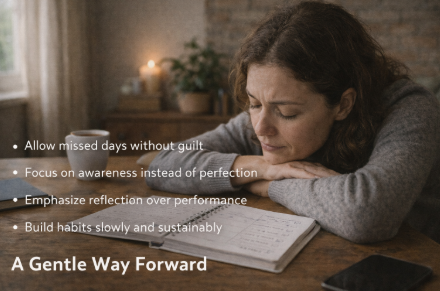
- Allow missed days without guilt
- Focus on awareness instead of perfection
- Emphasize reflection over performance
- Build habits slowly and sustainably
When structure feels supportive instead of restrictive, consistency becomes possible again.
A Gentle Way Forward
Over time, it became clear that many people don’t need another productivity tool or motivational speech.
They need:
- Permission to slow down
- Structure that feels safe
- Space to process emotional weight
- A way to rebuild stability without pressure
That understanding shaped the creation of a 12-week guided wellness reset — designed not as a quick fix, but as a steady return to balance, clarity, and self-trust.
If This Resonates, Listen to It
Resonance isn’t coincidence. It’s recognition. If you see yourself in these words, it’s not because something is wrong with you. It’s because you’ve been strong for a long time — and strength without rest always has a cost.
Healing doesn’t require urgency. It requires consistency, compassion, and patience. And sometimes, the most productive thing you can do is reset — gently.
A Gentle Next Step
If you’re looking for a structured but pressure-free way to support burnout recovery, emotional clarity, and gentle routines, I’ve created a 12-week guided wellness workbook designed to meet you where you are.
You can explore it here: https://digibookbazaar.com/the-wellness-reset-system-
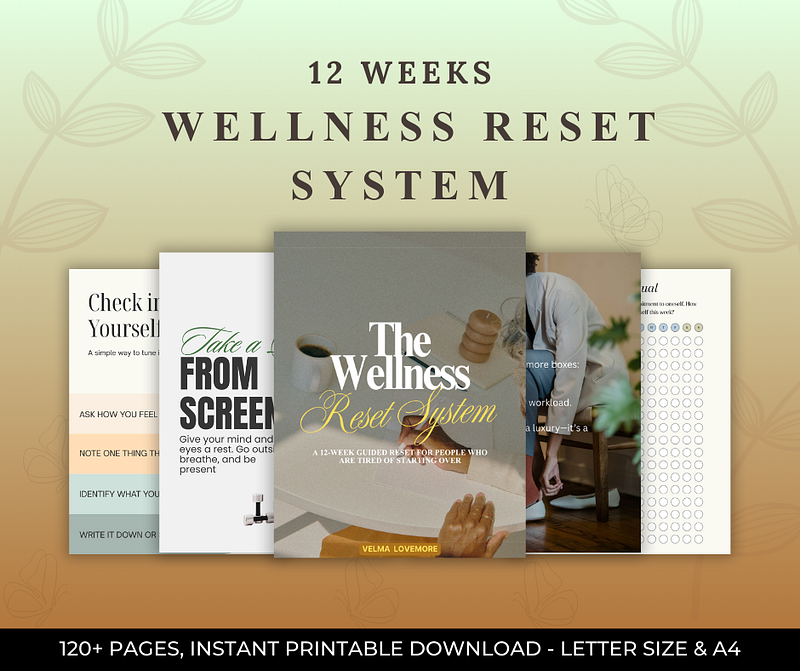
What the Wellness Reset System Was Designed to Do
The Wellness Reset System was created specifically for people who are tired of pushing, fixing, and forcing themselves forward.
It’s a 12-week guided wellness workbook designed to support burnout recovery, emotional clarity, and gentle habit rebuilding — without hustle culture or unrealistic expectations.
Instead of focusing on productivity, the system focuses on stability. Each week addresses a core area affected by burnout, including:
- Rest without guilt
- Mental and emotional overload
- Disconnection from the body
- Weak or blurred boundaries
- Loss of self-trust
- Inconsistent routines
- Energy depletion
- Identity shifts after hard seasons
These aren’t surface-level topics. They’re the quiet areas where burnout takes root.