
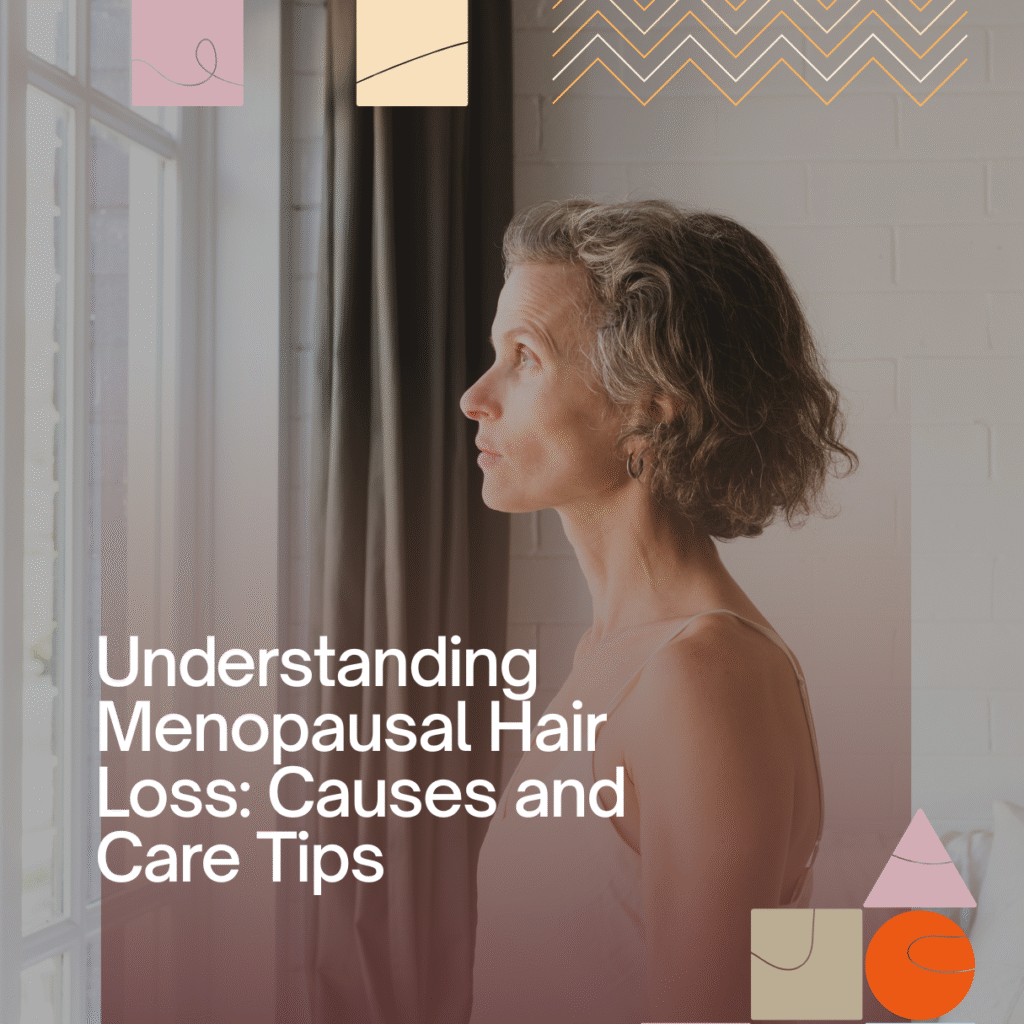
Menopause brings about a lot of changes.
Sleep comes in shifts. Mood fluctuates. Energy is not constant.
Then one morning you notice something different. There is more hair on the brush. There are more strands in the shower drain. There’s less volume where there used to be fullness.
For many women, menopausal hair loss is a very personal experience. One’s hair can reveal their identity. assurance and femininity. When it begins to thin, you may feel as though you are losing a part of yourself.
But you’re not really “failing.” You’re not aging incorrectly. Moreover, you are not by yourself.

Menopausal hair changes are common and are linked to actual biological changes. The good news? Knowing the cause makes it possible to provide meaningful, all-encompassing care.
Let’s examine what’s going on and what you can do to help.
Why Hair Thins During Menopause
The primary driver behind menopausal hair loss is hormonal change.
As women move through perimenopause and menopause:
- Estrogen levels decline
- Progesterone drops
- Androgens (male-pattern hormones) become more dominant in comparison
Estrogen helps keep hair in its growth phase longer. When estrogen decreases, hair:
- Enters the shedding phase faster
- Grows back thinner
- May stop growing in some follicles altogether
This type of thinning is often called female pattern hair loss, and it typically shows up as
- Widening of the hair part
- Thinning at the crown
- Overall reduction in hair density
Menopausal thinning is typically gradual, which can be even more annoying than dramatic patchy hair loss.
But hormones are only part of the story.

The Hidden Contributors No One Talks About
During midlife, everything changes, including hormones.
1. Persistent Stress
Menopause frequently coincides with:
- Transitions in careers
- Taking care of elderly parents
- Financial strain
- Changes in relationships
- Health issues
Cortisol levels are elevated by prolonged stress. Increased cortisol can:
- Interrupt cycles of hair growth
- Boost the level of inflammation
- Decrease the blood supply to hair follicles
Hormonal thinning may be exacerbated by stress-related shedding, also known as telogen effluvium. You may be surprised to learn how important your nervous system is.
2. Nutrient Depletion
Hair is not essential for survival. When nutrients are limited, your body prioritizes vital organs, not your scalp.
Common deficiencies that contribute to hair thinning include:
- Iron
- Vitamin D
- B12
- Zinc
- Protein
Many women in midlife unknowingly run low in one or more of these.
3. Imbalances in the Thyroid
Menopause can cause changes in thyroid function. Hair thinning can result from thyroid conditions that are either overactive or underactive.
It’s worthwhile to request lab work from your provider if shedding seems excessive.
The Emotional Side of Hair Loss
We don’t talk enough about this part.
Hair thinning can trigger:
- Reduced self-esteem
- Social withdrawal
- Increased anxiety
- Fear of “looking old.
For some women, it becomes a silent source of shame.
But thinning hair does not reduce your worth.
Menopause is not a loss of femininity; it is a biological transition. A recalibration. A powerful, often misunderstood stage of life.
Confidence during menopause is not about pretending nothing changed.
It’s about caring for yourself in deeper ways.

Holistic Care: Supporting Hair From the Inside Out
There are significant, helpful actions you can take even though there isn’t a magic overnight solution.
1. Control the Nervous System
Safety in the body is the first step towards healthy hair.
Everyday procedures for regulation:
- Breathe slowly for five minutes each morning and evening.
- Calm strolls outside
- Cutting back on excessive stimulation before bed
- Regular sleep schedule
Your body may transition from survival to restoration when cortisol levels drop.
2. Nourish for Hair Growth
Focus on whole-food nourishment:
Protein
Hair is made of keratin (a protein). Aim for adequate daily protein from:
- Eggs
- Beans
- Lentils
- Fish
- Greek yogurt
Iron-rich foods
- Spinach
- Grass-fed beef
- Pumpkin seeds
Healthy fats
- Avocado
- Olive oil
- Salmon
- Walnuts
Vitamin D
Sunlight exposure (safely) and testing levels when appropriate.
3. Support Scalp Circulation
Healthy follicles need blood flow.
Gentle scalp stimulation can help:
- Scalp massage (5 minutes daily)
- Rosemary oil diluted in carrier oil
- Low-level red light therapy devices
Improving circulation supports follicle activity.
4. Consider Medical Options (Without Shame)
Some women benefit from:
- Topical minoxidil
- Hormone therapy (when appropriate)
- Platelet-rich plasma treatments
Holistic care does not mean rejecting medical support. It means making informed, balanced decisions.
5. Protect What You Have
Gentle hair care becomes essential:
- Avoid tight hairstyles
- Reduce heat styling
- Use sulfate-free shampoos
- Avoid aggressive brushing
Think preservation, not punishment.
What’s Normal, And When to Seek Help
Expect some hair loss during menopause.
However, if you observe:
- Sudden clumps of hair falling out
- Bald patches
- Severe hair thinning in months
- Associated symptoms like tiredness, weight changes, or brittle nails
Blood tests can help diagnose problems like a thyroid, anemia, or severe deficiencies.
Reframing the Narrative
While menopause is often seen as a decline in life, it can also be a period of recalibration. Thinning hair may be a sign of loss, but it can also be a sign of opportunity:
- Take time to slow down
- Take time to nourish more deeply
- Take time to reduce stress
- Take time to put yourself first
This is not the end of beauty; this is a shift in how we think of beauty. Confidence in midlife is not based on perfect hair; it is based on embodied wisdom.
Gentle Daily Hair-Support Ritual
Here’s a simple 5-minute practice:
- Take three slow breaths.
- Massage your scalp with your fingertips in circular motions.
- Speak one affirming thought:
“My body is adjusting. I support it with patience.” - Eat one protein-rich meal that day
- Go to bed 30 minutes earlier than usual.
Consistency matters more than intensity.

Closing: You Are Not Losing Yourself
Menopausal hair loss is understandably scary at first.
However, it is important to understand that hair loss means nothing in terms of loss of self-worth. Your body is changing, not failing you.
With appropriate knowledge, support, and bodywork, you can help your hair, as well as boost something even better:
Your self-confidence. This, of course, never falls.