
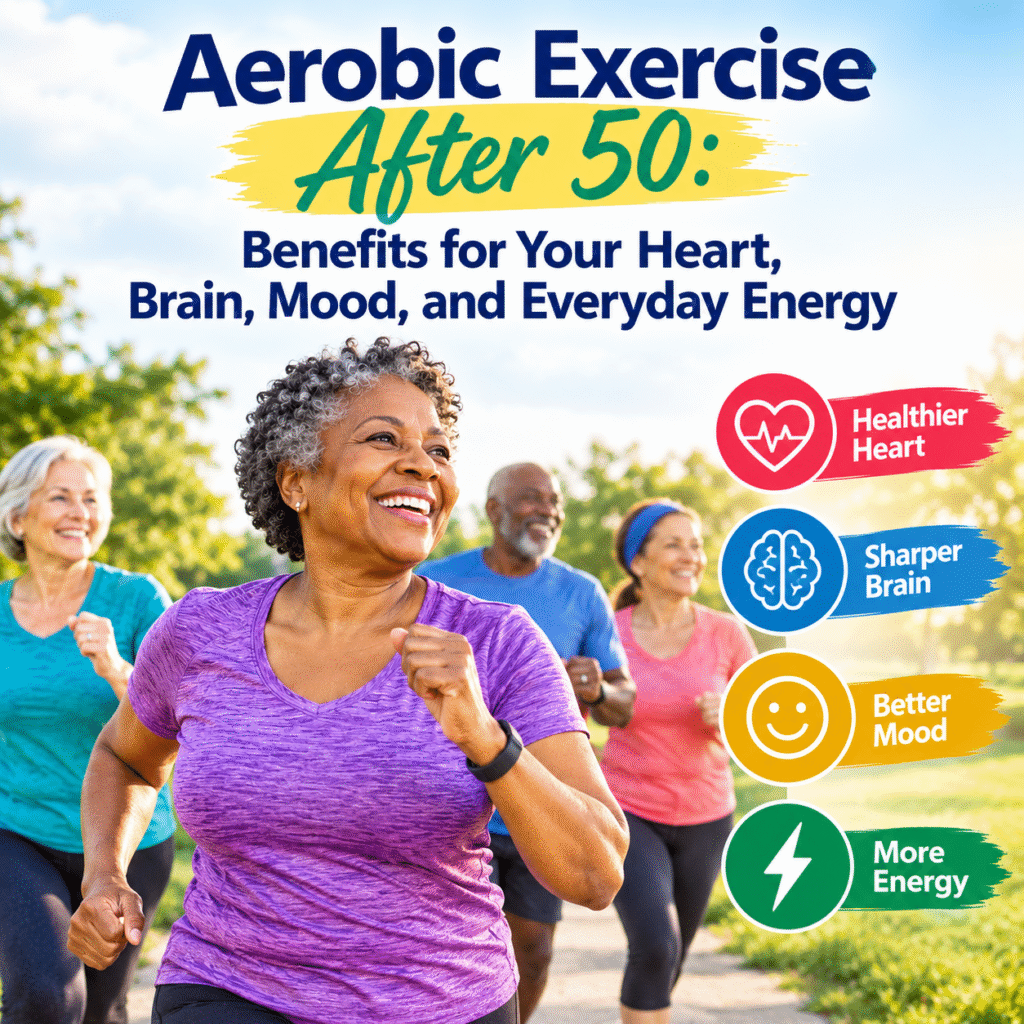
Turning 50 doesn’t mean slowing down. In fact, it may be one of the most important times in life to become more intentional with your movement.
As we age, simple day-to-day activities – climbing stairs, lifting grocery bags, vacuuming the house, traveling or playing with grandchildren – can start to take more effort. Aerobic exercise trains the heart, lungs, blood vessels, muscles and brain to work more efficiently, so those everyday moments feel easier.
You don’t have to become a runner or torture yourself with workouts to reap the benefits. Brisk walking, swimming, dancing, cycling, water aerobics and other rhythmic activities all tone your body and help you stay healthy for years to come.
The goal is not to exercise as though you are still 25. It is to move in ways that help you feel capable, alert, independent, and energized at the age you are now.

What Is Aerobic Exercise?
Aerobic exercise is any sustained activity that raises your heart rate and makes you breathe more deeply while using large muscle groups. It is sometimes called cardiovascular exercise, endurance exercise, or simply “cardio.”
Common examples include:
- Brisk walking
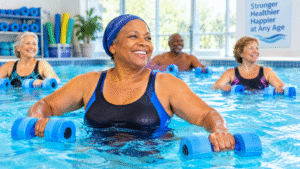
- Swimming or water aerobics
- Cycling
- Dancing
- Low-impact aerobic classes
- Hiking
- Using an elliptical machine
- Climbing stairs
- Light jogging
- Active gardening or yard work
During moderate-intensity aerobic exercise, your breathing becomes faster, but you should generally still be able to speak in short sentences. This is often called the “talk test.” If you can sing easily, you may need to increase your pace slightly. If you cannot say more than a few words without stopping for breath, the activity may be vigorous rather than moderate.
Why Aerobic Exercise Becomes Especially Important After 50
The body naturally changes with age. Muscle mass may gradually decline, joints can become stiffer, metabolism may slow, and the heart and blood vessels may not work as efficiently as they once did.
These changes are real, but they do not mean that weakness and poor health are inevitable.
Regular physical activity can help people maintain mobility, protect their independence, manage chronic health risks, and continue doing the things they enjoy. Even people who have been inactive for years can benefit from beginning with small, manageable amounts of movement.
The body responds to consistent activity at nearly every age.
1. Aerobic Exercise Strengthens Your Heart
Your heart is a muscle, and like other muscles, it benefits from regular activity.
When you perform aerobic exercise, your heart pumps faster to deliver oxygen-rich blood throughout your body. Over time, this repeated challenge can improve cardiovascular fitness, helping the heart circulate blood more efficiently.
Regular physical activity is associated with a lower risk of heart disease and stroke. It can also help manage several factors that affect cardiovascular health, including blood pressure, cholesterol levels, blood sugar, and body weight.
You do not have to exercise intensely to support your heart. A steady walking routine can be an excellent place to begin. Walking is accessible, requires little equipment, and can be adjusted to suit your current ability.
Consistency matters more than trying to do too much at once.

2. Movement Supports the Aging Brain
Aerobic exercise is not only a workout for the body; it is also an investment in brain health.
Physical activity increases blood flow throughout the body, including the brain. Regular movement can support thinking, learning, memory, and problem-solving. According to the Centers for Disease Control and Prevention, some brain benefits can begin after a single session of moderate-to-vigorous activity.
Over the longer term, regular physical activity is associated with a reduced risk of cognitive decline and dementia, including Alzheimer’s disease. It may also help people remain mentally alert and better able to manage daily responsibilities as they age.
Exercise does not guarantee that someone will never experience memory problems. However, it is one of several healthy habits that may help protect the brain, especially when combined with sufficient sleep, nutritious food, social connection, and mentally stimulating activities.
A walk with a friend offers several benefits at once: physical movement, fresh air, conversation, and social connection.
3. Aerobic Activity Can Lift Your Mood
Stress does not disappear after 50. Many adults are managing work, finances, caregiving, health changes, family concerns, grief, retirement decisions, or uncertainty about the future.
Aerobic exercise can provide a healthy release for some of that emotional pressure.
Even one exercise session may reduce short-term feelings of anxiety. Regular physical activity can also lower the risk of depression, support better sleep, and contribute to a greater sense of well-being.
Movement creates a valuable mental pause. A walk, swim, or dance session gives you time away from screens, responsibilities, and repetitive thoughts. It can help you return to your day feeling calmer and more centered.
Exercise is not a replacement for professional mental health care when it is needed. However, it can be a valuable part of a broader self-care and treatment plan.

4. Regular Exercise Can Improve Everyday Energy
It may seem strange to use energy to gain energy, especially when you already feel tired. Yet regular aerobic exercise can improve endurance, circulation, sleep quality, and the body’s ability to use oxygen.
As your fitness improves, ordinary activities may require less effort. You may notice that you can walk farther, climb stairs with less breathlessness, complete errands more comfortably, or recover more quickly after a busy day.
Exercise can also interrupt the cycle of inactivity. When tiredness causes us to move less, the body can become increasingly deconditioned. Then even simple activities feel exhausting, which encourages still more inactivity.
The way out of that cycle does not have to be a strenuous workout. It may begin with a five- or ten-minute walk.
Over time, those minutes can build both stamina and confidence.
5. Aerobic Exercise Helps Protect Independence
One of the greatest benefits of staying active after 50 is the ability to keep participating in your own life.
Cardiovascular endurance supports many of the tasks associated with independence, including shopping, traveling, cooking, household chores, walking through large stores, and keeping up with family activities.
Aerobic exercise works best as part of a balanced routine that also includes strength, flexibility, and balance training. Strength exercises help preserve muscle, while balance work can reduce the risk of falls as we get older.
The goal is not merely to add years to life. It is to support the strength and stamina needed to enjoy those years.
How Much Aerobic Exercise Should You Get?
General health guidelines recommend that adults aim for at least:
- 150 minutes of moderate-intensity aerobic activity each week, or
- 75 minutes of vigorous-intensity aerobic activity each week, or
- An equivalent combination of moderate and vigorous activity.
The activity can be spread throughout the week. For example, 30 minutes of brisk walking on five days would total 150 minutes.
However, 150 minutes should not become an all-or-nothing rule. If you are currently inactive, begin with what you can manage. Even brief periods of activity count, and some movement is better than none.
You might start with:
- A 10-minute walk three times per week
- Five minutes of marching in place
- A short beginner’s dance routine
- Ten minutes on a stationary bicycle
- Gentle water walking
- Several short activity breaks during the day
As your body adjusts, gradually increase the duration, frequency, or intensity, but not necessarily all three at once.
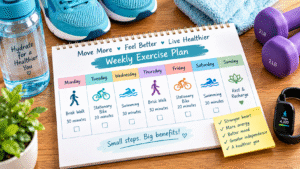
A Gentle Beginner’s Plan
If you have not exercised recently, the following plan may help you establish a routine:
Week 1
Walk or perform another comfortable aerobic activity for 10 minutes on three days.
Week 2
Increase to 12–15 minutes on three or four days.
Week 3
Aim for 15–20 minutes on four days.
Week 4
Work toward 20–25 minutes on four or five days, depending on how you feel.
Begin each session with a few minutes of slower movement. End by gradually reducing your pace rather than stopping abruptly. This gives your heart rate and breathing time to adjust.
Progress at a pace that feels safe for your body. There is no prize for reaching the recommended amount faster.
Choosing an Activity You Will Continue
The “best” exercise is rarely the one that burns the most calories or looks impressive online. It is the one that is safe, enjoyable, accessible, and realistic enough to become part of your life.
If walking causes discomfort, you might prefer swimming, water aerobics, or a stationary bicycle. If traditional workouts feel boring, try dancing to your favorite music. If exercising alone makes it difficult to stay motivated, join a class or walk with a friend.
Ask yourself:
- What kind of movement do I enjoy?
- What activity fits my current abilities?
- When do I usually have the most energy?
- Would music, companionship, or a change of scenery help?
- What is the smallest routine I can perform consistently?
Enjoyment is not a minor detail. It is one of the strongest foundations for consistency.
What If Your Knees or Joints Hurt?
Joint discomfort does not always mean you must avoid activity. In many cases, low-impact movement can help improve function and reduce stiffness. Walking on a level surface, swimming, water exercise, and stationary cycling may be gentler options.
Your shoes also matter. Choose footwear that fits properly, has nonslip soles, and provides appropriate cushioning and support.
Pain should never be ignored, however. Stop and seek professional guidance if an activity causes sharp, worsening, or persistent pain. A healthcare professional or physical therapist can help identify exercises that suit your condition and current mobility.
Important Safety Precautions
Many generally healthy adults can begin with light activity and increase gradually. However, speak with a healthcare professional before significantly changing your exercise routine if you have a chronic medical condition, a recent injury, ongoing balance problems, unexplained shortness of breath, or a history of heart attack or stroke.
Stop exercising and seek prompt medical attention if you experience:
- Chest pain, pressure, or tightness
- Severe or unusual shortness of breath
- Fainting or extreme dizziness
- A rapid or irregular heartbeat accompanied by discomfort
- Sudden weakness, confusion, or difficulty speaking
- Pain that spreads to the arm, back, neck, or jaw
Listen to your body, stay hydrated, avoid extreme temperatures, and allow time for recovery. Challenging yourself can be healthy; punishing yourself is not.
Make Movement Part of Everyday Life
A healthy routine does not have to happen entirely inside a gym. Aerobic activity can be woven into daily life.
Try:
- Walking while talking on the phone
- Taking a short walk after a meal
- Dancing during two or three favorite songs
- Parking farther from the entrance when it is safe
- Walking through an indoor shopping center in poor weather
- Taking active breaks while watching television
- Gardening or completing energetic household chores
- Scheduling walks as appointments on your calendar
Small choices accumulate. Ten minutes in the morning and ten minutes later in the day still give your body 20 minutes of valuable movement.
Your Next Chapter Can Be an Active One
Aerobic exercise after 50 is not about chasing youth or proving how hard you can push yourself. It is about protecting the life you want to keep living.
Every walk can support your heart. Every dance can brighten your mood. Every cycling or swimming session can strengthen your stamina. Every consistent effort can help you remain more confident and independent.
Begin where you are. Choose an activity that feels manageable, give your body time to adapt, and allow small victories to count.
Your pace does not have to match anyone else’s. It only has to keep you moving forward.

A Gentle Reminder
This article is intended for general education and is not a substitute for personalized medical advice. Consult a qualified healthcare professional if you have symptoms, chronic health conditions, mobility concerns, or questions about which exercises are appropriate for you.