
You remember when taking care of yourself felt easier.
Perhaps you walked regularly, prepared meals you enjoyed, or went to bed before exhaustion made the decision for you. Then life changed. Responsibilities grew, a difficult season arrived, or your familiar routine slowly slipped away.
Now you want to begin again.
But the moment you think about everything you “should” be doing, getting started feels like another burden. Eat better. Move more. Sleep earlier. Drink water. Journal. Spend less time on your phone.
Where do you even begin?
Rebuilding healthy habits starts with choosing something you can reasonably return to, even when life is imperfect.
You can care about your well-being deeply and still need a simpler approach. Here is how to create one.

Begin With Your Life as It Is Today
One of the easiest ways to become overwhelmed is to build a routine around the energy, time, or circumstances you used to have.
Perhaps you once enjoyed long morning walks. Today, your mornings involve caregiving, work, appointments, or a body that needs a different pace.
That change deserves consideration.
Before choosing a habit, ask yourself:
- What time do I realistically have available?
- Which part of my day feels most manageable?
- What keeps getting in the way?
- What support or adjustment would make this easier?
Answer according to an ordinary day—not your most motivated one.
A habit that fits your current circumstances gives you somewhere practical to begin.
Choose One Habit That Would Make Your Day Easier
When several areas of life feel unsettled, changing everything at once can seem like the sensible solution. Yet each new commitment requires attention.
Start by asking: Which small change would help me most right now?
You might choose to:
- Prepare lunch before the afternoon becomes busy.
- Take a short, comfortable walk after breakfast.
- Begin your evening wind-down a little earlier.
- Pause for a quiet moment before checking messages.
- Write one sentence about how your day felt.
Choose one. Let the others wait without turning them into a list of things you are failing to do.
For example, if mornings feel chaotic, laying out your clothes the night before may be a more useful starting point than creating a lengthy morning wellness routine.
Make the First Step Small and Specific
“Take better care of myself” is a meaningful intention, but it offers little direction when you are tired.
A specific action is easier to recognize and carry out.
Compare these intentions:
Broad intention | A manageable starting point |
“I need to move more.” | “After breakfast, I’ll walk for five minutes at a comfortable pace.” |
“I should journal.” | “After my evening tea, I’ll write one sentence.” |
“I want less screen time.” | “I’ll put my phone away while I eat lunch.” |
“I need to get organized.” | “Before bed, I’ll write down tomorrow’s first priority.” |
Adjust each action to your abilities and circumstances.
The starting point should feel clear enough that you know what to do and small enough that you can imagine doing it on a busy day.
You can expand later if you want to.
Give Your Habit a Place in the Day
A habit is easier to remember when it has a recognizable place in your routine.
Try connecting your chosen action to something that already happens:
After I __________, I will __________.
For example:
“After I brush my teeth, I will set out my water bottle.”
“After I finish lunch, I will step outside for a few quiet minutes.”
“After I close my laptop, I will write down any unfinished tasks for tomorrow.”
Choose a connection that makes practical sense. If you rarely eat breakfast at the same time, breakfast may be an unreliable reminder. Another daily activity might work better.

Remove One Obstacle Before Asking for More Willpower
Sometimes, the difficulty lies in the number of steps between you and the action.
You want to prepare lunch, but nothing is ready. You want to write, but your notebook is buried beneath paperwork. You want a quiet evening, but notifications keep interrupting it.
Look for one obstacle you can remove.
Wash the fruit when you bring it home. Place the notebook where you plan to sit. Set a reminder to silence nonessential notifications.
You can also simplify decisions. Choose two easy lunches for the week instead of searching for a different recipe every day.
Make the helpful choice easier to reach.
Create a Smaller Version for Difficult Days
A demanding day does not have to force a choice between doing everything and doing nothing.
Decide ahead of time what a smaller version of your habit could look like.
If you usually write a paragraph, you might write a few words. If you planned to prepare a meal, you might assemble a simple one from what is available.
Sometimes, illness, pain, or exhaustion means resting and seeking appropriate support. Allow your plan to account for that, too.
A flexible routine lets you respond thoughtfully to your circumstances. You do not need to prove your commitment by ignoring your needs.
Let a Missed Day Stay a Missed Day
You forget. An appointment runs late. Someone needs help. Your plans change.
Then the familiar thought appears: I’ve ruined it. I might as well start over next week.
Try describing what happened more accurately: “I missed my walk yesterday,” or “I stayed on my phone later than I intended.”
That description leaves room for a next step.
Ask:
- Was my plan too ambitious?
- Did I need a clearer reminder?
- Was there a practical obstacle?
- Was this simply an unusual day?
Use the answer to adjust your approach. Resume at the next reasonable opportunity without adding punishment, extra rules, or a dramatic restart.
Notice What Helps Before Adding More
Give your first habit some time before expanding your routine.
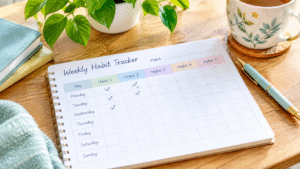
You might make a small check mark on a calendar or briefly note how the action fitted into your day. Keep the tracking simple enough that it does not become another obligation.
At the end of the week, reflect:
Was this manageable? Did it help? What would I change?
Perhaps the habit worked, but the timing did not. Perhaps you need a smaller starting point. Perhaps a different habit would serve you better.
Those observations are useful. Let them guide your next decision.
A Little Structure Can Help You Begin Again
You may know that you want to care for yourself more consistently while still feeling unsure where to start.
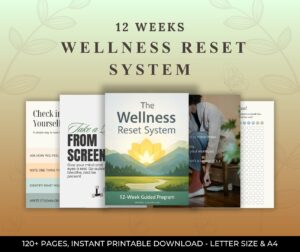
The Wellness Reset System offers a 12-week guided framework for reflecting on your wellness habits and making more intentional space for self-care.
You can use it to support the small changes you choose, taking time to consider what fits your life.
Visit Digi Book Bazaar to explore The Wellness Reset System and browse the wellness book collection.
Begin With Something You Can Do Today
You do not need a completely clear calendar or a burst of motivation to take one manageable step.
Choose a habit. Give it a place in your day. Make it easier to carry out, and allow yourself to adjust as you learn.
There may be interruptions along the way. You can keep returning with patience.
What is one small act of care you could make room for today?