
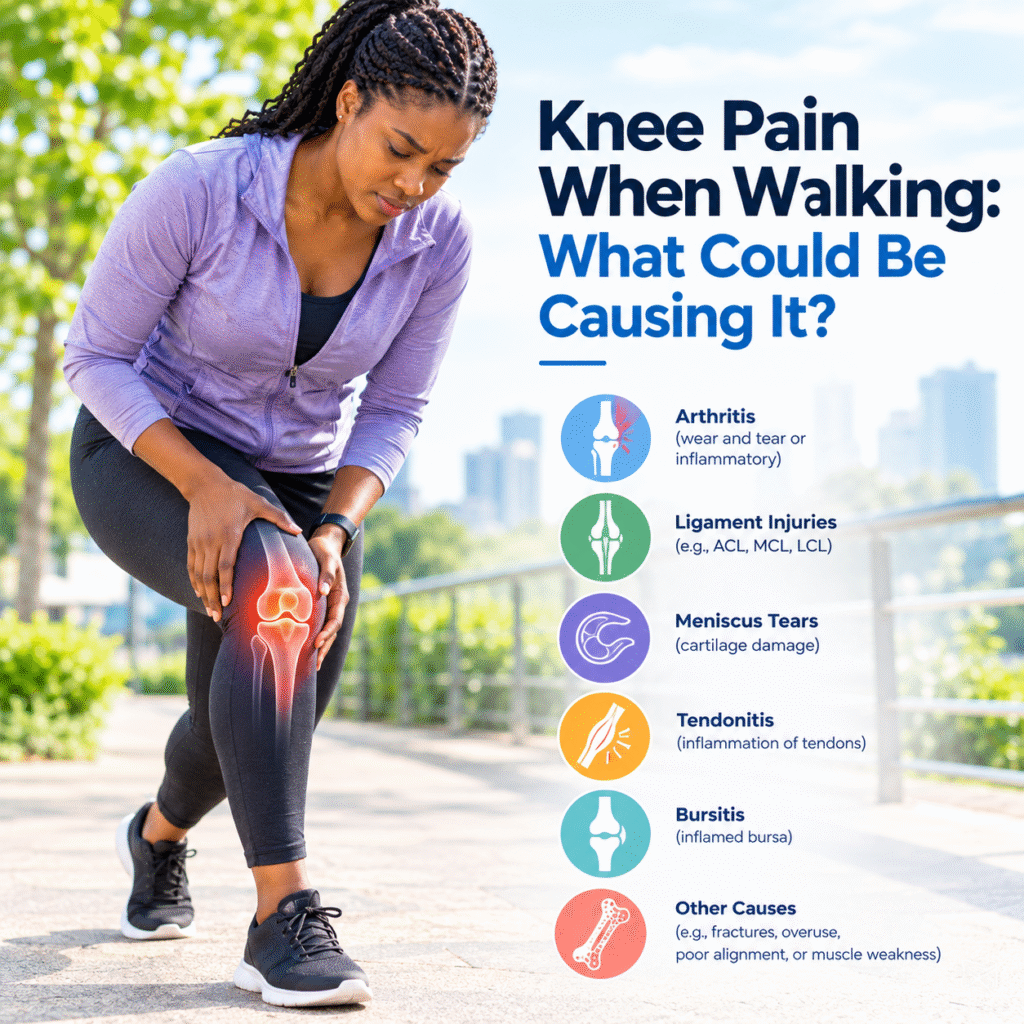
Walking is one of the simplest ways to stay active, support heart health, and maintain independence. But when every step brings an ache, a sharp twinge, or an unsettling feeling that the knee may give way, even a short walk can become difficult.
Knee pain while walking is not a diagnosis by itself. It is a symptom that can develop from everyday overuse, an injury, age-related changes, or a condition affecting another part of the body.
The location of the pain, when it appears, and whether it is accompanied by swelling, stiffness, clicking, or instability can provide useful clues. However, a healthcare professional is the right person to determine the underlying cause.
Living with pain can affect more than just your physical comfort—it can influence your mood, energy, routines, and overall wellbeing. The Wellness Reset System offers a gentle 12-week approach to rebuilding supportive routines without pressure.
Why Walking Can Reveal a Knee Problem
The knee is a weight-bearing joint. Each step requires bones, cartilage, ligaments, tendons, muscles, and the kneecap to work together.
Walking on level ground may feel comfortable, while hills, stairs, uneven surfaces, or longer distances place different demands on the joint.
Pain does not always mean the knee is severely damaged. Sometimes the tissues are irritated, the supporting muscles are weak or tight, or activity has increased too quickly. In other cases, persistent pain may point to arthritis or an injury that needs professional attention.
Common Causes of Knee Pain When Walking
1. Knee Osteoarthritis
Osteoarthritis is a common cause of knee pain, particularly in middle-aged and older adults. It develops as the tissues within the joint change over time, including deterioration of the cartilage that helps the bones move smoothly.
The pain may feel dull or achy and can become more noticeable during longer walks, when climbing stairs, or after sitting for an extended period.
Other possible symptoms include:
- Stiffness
- Swelling
- Reduced range of motion
- Grinding or cracking sensations
- Occasional buckling of the knee
Previous injuries, repetitive joint stress, age, family history, and excess body weight may increase the likelihood of developing knee osteoarthritis.
2. Patellofemoral Pain
Patellofemoral pain is usually felt around or behind the kneecap. Although it is sometimes called “runner’s knee,” it can affect people who do not run.
The discomfort may become worse when:
- Walking up or down stairs
- Walking on hills
- Squatting or kneeling
- Standing after sitting with the knee bent
- Increasing an exercise routine too quickly
Muscle weakness, alignment issues, sudden training changes, and repeated stress may all contribute to this condition.
3. A Meniscus Injury
The menisci are tough, rubbery pieces of cartilage that help cushion and stabilize the knee. A meniscus can tear during a sudden twisting movement, but age-related changes can also make it more vulnerable during an ordinary activity.
Possible symptoms include:
- Pain along the inner or outer part of the knee
- Stiffness and swelling
- Catching or locking
- Difficulty moving the knee fully
- A sensation that the knee may give way
Some people can still walk after a meniscus tear, so being able to put weight on the leg does not necessarily rule out an injury.
4. Tendon Irritation
Tendons connect muscles to bones. Repeated strain or a sudden increase in walking, climbing, jumping, or exercise can irritate the tendons surrounding the knee.
Patellar tendon pain is usually felt between the kneecap and shinbone. Quadriceps tendon discomfort tends to occur directly above the kneecap.
The affected area may feel tender, and the pain may increase when climbing stairs, walking uphill, or rising from a chair.
5. Bursitis
Bursae are small, fluid-filled sacs that reduce friction around joints. When one becomes inflamed, pain, tenderness, and swelling may develop.
Frequently kneeling can irritate the bursa at the front of the knee. Another form of bursitis can cause pain on the inner side of the knee, usually slightly below the joint.
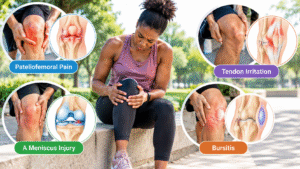
6. Ligament Sprains or Knee Instability
The knee’s ligaments help keep the joint stable. A fall, awkward step, sudden turn, or sports injury can stretch or tear one of these ligaments.
Pain may be accompanied by swelling, tenderness, or a feeling that the knee shifts, buckles, or gives way when walking.
A knee that repeatedly gives way should be evaluated because instability can increase the risk of falling and causing further injury.
7. Iliotibial Band Irritation
The iliotibial band is a thick band of tissue running along the outside of the thigh. When it becomes irritated, it can cause pain on the outer side of the knee, especially during repetitive activity.
This problem is commonly associated with runners and cyclists, but walkers may also experience it after suddenly increasing their distance or adding more hills to their route.
8. A Baker’s Cyst
A Baker’s cyst is a fluid-filled swelling that develops behind the knee. It often occurs because another condition inside the knee, such as arthritis or a meniscus injury, causes the joint to produce excess fluid.
A Baker’s cyst may create fullness, tightness, or discomfort behind the knee, particularly when bending or straightening the leg.
9. Pain Referred From the Hip or Back
Not every pain felt near the knee begins in the knee.
Arthritis in the hip can sometimes send pain toward the knee. A problem involving the lower back or a nerve may also produce pain, tingling, numbness, or weakness that travels down the leg.
This is why a thorough examination may include the hip, back, leg strength, balance, and walking pattern, not only the knee.
10. Inflammatory Arthritis, Gout, or Infection
Less commonly, knee pain may come from an inflammatory condition such as rheumatoid arthritis or gout.
A joint infection can cause rapidly worsening pain, warmth, redness, swelling, fever, or a general feeling of illness. A hot and swollen knee accompanied by fever requires prompt medical attention.
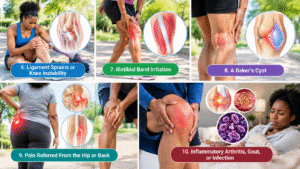
What the Location of Your Pain May Suggest
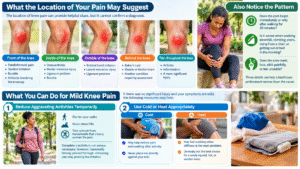
The location of knee pain can provide helpful clues, but it cannot confirm a diagnosis.
- Front of the knee: Patellofemoral pain, tendon irritation, bursitis, or arthritis involving the kneecap
- Inside of the knee: Osteoarthritis, a medial meniscus injury, a ligament problem, or bursitis
- Outside of the knee: Iliotibial band irritation, a lateral meniscus injury, or a ligament problem
- Behind the knee: A Baker’s cyst, muscle or tendon strain, or another condition requiring assessment
- Pain throughout the knee: Arthritis, inflammation, or a more significant injury
Pay attention to the pattern as well. Does the pain begin immediately or only after walking for 20 minutes? Is it worse when walking downhill, climbing stairs, rising from a chair, or getting out of bed in the morning?
Also notice whether the knee swells, locks, clicks painfully, or feels unstable. These details can help a healthcare professional narrow down the cause.
What You Can Do for Mild Knee Pain
If there was no significant injury and your symptoms are mild, the following measures may help.
Reduce Aggravating Activities Temporarily
Shorten your walks, avoid steep hills, and take a break from movements that clearly worsen the pain.
Complete inactivity is not always necessary. However, repeatedly forcing yourself through increasing pain may prolong the irritation.
Use Cold or Heat Appropriately
A cold pack wrapped in a cloth may help reduce pain and swelling after activity. Never place ice directly against your skin.
Heat may feel soothing when stiffness is the main problem, but it is generally not the best choice for a newly injured, hot, or swollen knee.
Try Lower-Impact Movement.
Depending on the cause of the pain and your clinician’s advice, swimming, water exercise, or using a stationary bicycle may help you remain active while placing less stress on the knee.
Build Strength Gradually
The muscles of the thighs, hips, and lower legs help support and control the knee. Strengthening these muscles can reduce strain on the joint and improve stability.
A physical therapist can identify specific areas of weakness and recommend exercises suited to your condition. Exercise should be increased gradually and should not produce sharp or escalating pain.
Check Your Footwear
Shoes should fit properly and provide a comfortable, stable base. Worn-out soles or footwear that changes the way you walk may contribute to discomfort.
A healthcare professional can help you determine whether a shoe insert is appropriate. Expensive or highly corrective products are not automatically better.
Could a Knee Brace Help?
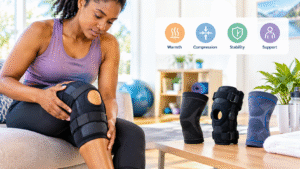
A knee sleeve or brace may provide warmth, compression, stability, or a greater sense of support for some people. However, knee braces are not one-size-fits-all.
A simple compression sleeve may feel comfortable during light walking, while a more structured brace may be recommended for certain forms of arthritis or instability. The correct choice depends on the cause and location of the pain.
Before purchasing a knee support, consider:
- Where the pain is located
- Whether the knee is swollen or unstable
- The activity for which it will be used
- Proper sizing and adjustability
- Breathability and comfort
- Any circulation, nerve, or skin problems
A brace should feel supportive without cutting off circulation, causing numbness, or creating additional pain.
Most importantly, a brace should not be used to hide persistent symptoms. Locking, repeated giving way, significant swelling, or worsening pain deserves a medical evaluation rather than relying on a brace alone.
Be Careful With Pain Medication
Over-the-counter pain relievers are not appropriate for everyone.
Anti-inflammatory medicines can interact with other medications and may be unsafe for people with certain kidney, stomach, heart, bleeding, or blood-pressure conditions.
Ask a pharmacist or healthcare professional which pain-relief option is safest for you, especially if you take prescription medications or manage a chronic health condition.
When Should You See a Healthcare Professional?
Arrange an appointment if you have knee pain:
- Persists or keeps returning
- Is gradually getting worse
- Affects your sleep or everyday activities
- Causes ongoing swelling or stiffness
- Limits your ability to bend or straighten the knee
- Began after an injury
- Is accompanied by painful clicking, locking, or instability
- Has not improved with reasonable self-care
A healthcare professional may examine the knee’s movement and stability, observe how you walk, and assess the hip, back, and surrounding muscles.
Depending on the findings, treatment may include activity changes, physical therapy, medication, weight management when appropriate, injections, or referral to a specialist.
Imaging can be valuable in certain situations, but not every painful knee requires an immediate X-ray or MRI.
Warning Signs That Need Prompt Medical Care
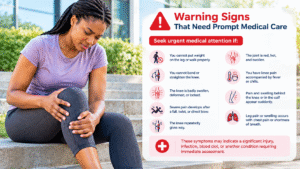
Seek urgent medical attention if:
- You cannot put weight on the leg or walk properly.
- You cannot bend or straighten the knee.
- The knee is badly swollen, deformed, or locked.
- Severe pain develops after a fall, twist, or direct blow.
- The knee repeatedly gives way.
- The joint is red, hot, and swollen.
- You have knee pain accompanied by fever or chills.
- Pain and swelling behind the knee or in the calf appear suddenly.
- Leg pain or swelling occurs with chest pain or shortness of breath.
These symptoms may indicate a significant injury, infection, blood clot, or another condition requiring immediate assessment.
The Bottom Line
Knee pain while walking is your body’s signal to pay attention—but it does not necessarily mean you have to stop moving forever.
The cause may be as simple as doing too much too soon, or it may involve arthritis, irritated tendons, damaged cartilage, or another condition requiring targeted care.
Listen to the pattern of your symptoms. Adjust your activity instead of forcing painful steps, strengthen the supporting muscles with proper guidance, and seek an evaluation when pain persists or warning signs appear.
The goal is not simply to silence the discomfort. It is to understand what is driving it so you can move with greater comfort, confidence, and safety.
Medical disclaimer: This article is intended for general educational purposes only and is not a substitute for diagnosis or treatment from a qualified healthcare professional. Seek personalized medical advice for persistent, severe, or worsening symptoms.
Managing your wellbeing during difficult or uncomfortable seasons doesn’t have to mean pushing through everything. If you’re looking for a gentler way to reset your routines, explore The Wellness Reset System.