
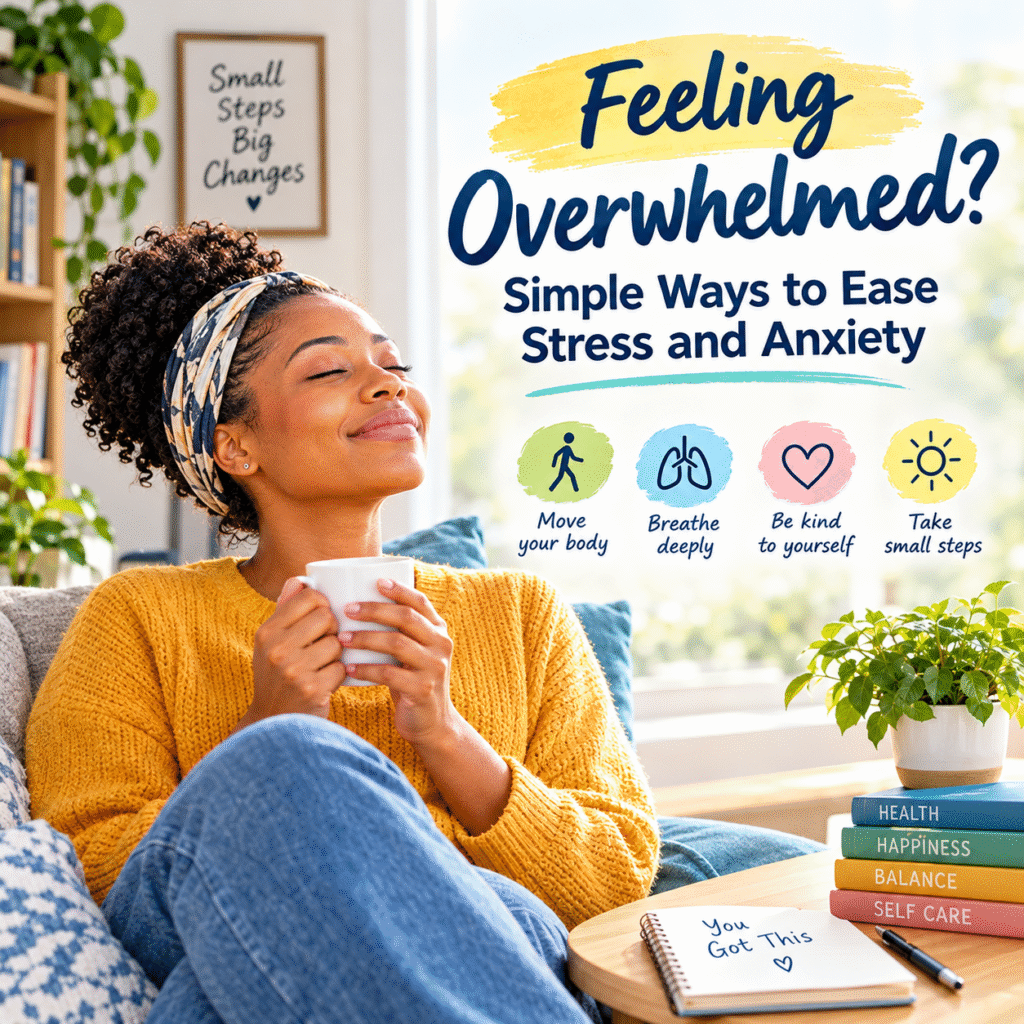
Some days, overwhelm speaks in a loud voice: a mind that races, a jaw that clenches, and a dozen tasks that are incomplete. It comes softly some days. You answer one more message, help one more person, and realize you haven’t taken a breath for yourself.
If this is you, this isn’t for you. You don’t have to figure out your whole life today. Even if the larger issue will take time to resolve, a few small choices can make this moment more manageable.

When stress and anxiety start to feel overwhelming, small changes in how you rest, manage your energy, and care for yourself can make a difference. The Wellness Reset System offers a gentle 12-week approach to creating healthier routines without adding more pressure.
First, notice what overwhelm feels like for you
Stress often rises in response to a demand or difficult situation. Anxiety may linger as worry or dread even when there is no immediate task to solve. Both can affect your sleep, concentration, and body. You might feel restless, tense, irritable, tired, or unsure where to begin. National Institute of Mental Health (NIMH)
Try naming what you feel without judging it: “I feel overloaded,” or “My thoughts are moving fast.” Then ask yourself what would help you through the next few minutes. You can begin there.
1. Give yourself one quiet minute
Place your feet on the floor. Relax your shoulders if you can. Breathe in gently and let the breath leave slowly. There is no need to force a deep breath or follow a perfect count.
A breathing exercise will not erase the cause of stress, but it can give you a pause before you decide what to do next. If focusing on your breathing feels uncomfortable, look around and name a few things you can see or hear instead. The NHS describes gentle breathing as a technique you can practice in a comfortable position. NHS

2. Take the pressure out of your to-do list
When everything feels urgent, write down what is circling in your head. Then ask:
- What truly needs attention today?
- What can wait?
- What could someone help me with?
Choose one small action from the first answer. “Pay the electricity bill” is easier to start than “get my life organized.” If even that feels too large, begin by finding the bill or opening the website.
You are creating a way in. You do not have to finish everything to make progress.
3. Move in a way that meets you where you are
You do not need an intense workout on a hard day. Walk around the block, stretch gently, dance to one song, or spend a few minutes outside. Movement is one of several habits that can help with anxiety, and even a short activity break can be a useful way to care for yourself. National Institute of Mental Health (NIMH)
Choose something that suits your body and energy today. Five comfortable minutes may feel more inviting than a demanding routine.

4. Give your worries a place to land
Some worries point toward an action. Others go around in circles. Try putting a worry on paper and asking, “Is there something I can do about this today?”
If there is, write down the first step. If there is not, you can set the thought aside and return to it at a time you choose. The NHS includes scheduled “worry time” among its practical self-help techniques. NHS
If writing makes you feel more distressed, skip it. Talking with someone you trust may feel better.
5. Care for the basics, gently
Stress can feel harder to handle when you have had little sleep or are relying on extra caffeine to get through the day. Where possible, make room for rest, regular meals, and a little time away from demands.
You do not need a flawless routine. Choose one adjustment that fits your circumstances: an earlier bedtime, a break outdoors, or noticing whether another cup of coffee leaves you feeling more on edge. Sleep, movement, and reducing excess caffeine can support anxiety care, though they do not replace treatment when it is needed. National Institute of Mental Health (NIMH)

6. Tell someone what you need
Overwhelm can make you withdraw just when connection might help. You could send a brief message: “I’m having a difficult day. Could you check in with me?” If practical help would make a difference, ask for something specific.
A friend, family member, neighbor, faith community, or counselor may each offer a different kind of support. You do not have to explain every detail to deserve help. Centers for Disease Control and Prevention
When to reach out for professional support
Self-care matters, but persistent anxiety deserves attention. If stress or worry is interfering with your work, relationships, sleep, or daily life, speak with a health care professional or mental health provider. Treatment options include therapy and, for some people, medication. National Institute of Mental Health (NIMH)
If you are in the United States and experiencing a mental health crisis or thoughts of suicide, call or text 988. If there is immediate danger, call 911. National Institute of Mental Health (NIMH)
One small step is enough to begin
You may still have a full calendar or a problem that cannot be fixed this afternoon. But you can give yourself a moment of breathing room. Put your feet on the floor. Choose one next step. Ask for help if you need it.
Being overwhelmed is a feeling, not a failure. You can respond to it with care, one manageable choice at a time.

This article is for general education and does not replace personalized medical or mental health care.
You don’t have to navigate every stressful season by simply pushing through it. If you’re ready for a gentler reset, explore The Wellness Reset System.