

You button your jeans in the morning without a second thought. By dinner, the waistband feels tight, your belly feels full, and you wonder what changed.
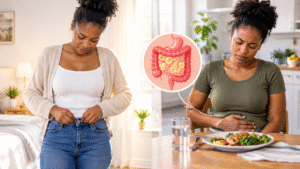
Bloating is a feeling of pressure or fullness in the abdomen. Sometimes your belly looks larger, too. Because you eat, drink, and digest food throughout the day, that discomfort may become more noticeable by evening. The cause, though, is not always dinner. It may be a pattern that has been building since breakfast. NIDDK
What could be behind it?
Gas builds up as food moves through your gut
Gas enters your digestive tract when you swallow air. It also forms when bacteria in your large intestine break down carbohydrates that were not fully digested earlier. Eating quickly, chewing gum, drinking something fizzy, or eating certain foods may add to the pressure you notice later. That does not mean you need to give up every food associated with gas. What matters is how your body responds. NIDDK
Constipation can make the feeling linger
If your bowel movements are infrequent or difficult, bloating may come with a sense that your abdomen never quite feels comfortable. Pay attention to changes in your usual bathroom habits, especially if the bloating keeps returning. NIDDK
A food or drink may be a trigger
Some people notice bloating after dairy products, certain carbohydrates, high-fat meals, or larger portions. It can be tempting to blame the last thing you ate, but one uncomfortable evening does not prove that a particular food is the cause. A short food and symptom diary can help reveal a more reliable pattern. NIDDK
If you suspect celiac disease, speak with a clinician about testing before starting a gluten-free diet. Removing gluten first can affect the accuracy of the tests. NIDDK

A digestive condition may be involved
Irritable bowel syndrome, or IBS, can cause bloating along with recurring abdominal pain and changes in bowel habits. Indigestion may cause uncomfortable fullness, belching, or upper-abdominal discomfort after eating. Because these conditions have different causes and treatments, ongoing symptoms deserve a proper assessment. NIDDK
Small changes that may help
You do not need a complicated “gut reset” to begin learning what helps your body. Try one change at a time:
- Slow down at meals. Give yourself time to eat and notice whether rushed meals leave you feeling worse.
- Look at your drinks and habits. Fizzy drinks, straws, and chewing gum may contribute to swallowed air for some people.
- Notice portion sizes. If a large evening meal regularly leaves you uncomfortable, try a smaller dinner or spread your food more evenly through the day.
- Take a comfortable walk. Gentle movement may help when you feel bloated.
- Address constipation gradually. Fluids, movement, and fiber may help, but adding a lot of fiber at once can increase gas.
- Keep a brief diary. Record when bloating begins, what you ate and drank, your bowel movements, and any pain. Look for repeated patterns rather than judging one meal. NIDDK
Be careful about cutting out many foods or relying on products that promise to “debloat” you overnight. If your diet is becoming increasingly restricted, a clinician or registered dietitian can help you investigate the cause while keeping your meals nourishing.

When should you get it checked?
Occasional bloating that settles is different from a new, persistent, or worsening change. Arrange a medical visit if bloating keeps returning, affects your daily life, or occurs with unexplained weight loss, blood in your stool, ongoing changes in bowel habits, or persistent pain. Seek urgent care for severe or sudden abdominal pain, repeated vomiting, or a swollen abdomen when you cannot pass stool or gas. nhs.uk
For women, persistent bloating along with pelvic pain or pressure, feeling full unusually quickly, or a new need to urinate more often also deserves medical attention. These symptoms can have many causes, but they should not be dismissed. cdc.gov
The takeaway
Your evening bloating may reflect a mix of meals, swallowed air, and bowel habits. A few careful observations and small adjustments can help you understand your own pattern. If the bloating is frequent, worsening, or accompanied by other symptoms, getting it checked is the most useful next step. Comfort begins with curiosity, not blame.
This article provides general health information and is not a diagnosis or a substitute for personal medical care.