

The morning routine sounded wonderful when you first imagined it.
You would wake early, move your body, write in your journal, prepare breakfast, and begin the day feeling composed. In the evening, you would put away your phone, tidy the kitchen, read a few pages, and settle into bed at a sensible hour.
Then an ordinary day happened.
You woke later than expected. Someone needed your attention. An appointment ran over. By evening, you had barely enough energy to prepare dinner, much less complete a carefully planned wind-down.
It is easy to look at that gap between intention and reality and blame yourself.
But a useful routine needs to account for the life you actually have: your responsibilities, energy, preferences, and occasional interruptions.
The best place to begin is with a simple question: What would make the beginning and end of my day easier to live through?

Look at Your Day Before Designing a New One
Before adding habits, spend a few days noticing what already happens.
When do you usually wake up? What requires your attention first? Where do you lose time? What tends to keep you occupied later than intended?
Look for specific difficulties.
Perhaps you spend your first twenty minutes searching for things. Maybe checking messages leads to a rushed breakfast. At night, you may keep working because you have no clear stopping point.
Those observations give your routine a purpose.
If mornings are difficult because you cannot find your keys, a designated place for them may help more than a lengthy journaling practice. If evenings feel crowded because dinner requires too many decisions, a short meal plan may be the most useful adjustment.
Start with the inconvenience you repeatedly encounter.
Give Each Routine a Clear Job
A routine becomes easier to shape when you know what you want it to accomplish.
For the morning, you might want to:
- Get ready with less rushing.
- Have time to eat before your responsibilities begin.
- Choose a manageable first priority.
For the evening, you might want to:
- Stop work at a clearer point.
- Prepare a few essentials for tomorrow.
- Enjoy some quiet time before bed.
Choose one or two priorities for each part of the day. You can build around those without filling every available minute.
Ask yourself:
“If this routine helped with only one thing, what would I want that to be?”
Build Your Morning Around What Already Happens
You already have a morning sequence, even if you have never called it a routine.
You wake up, use the bathroom, get dressed, prepare a drink, feed a pet, or help someone else get ready. These familiar activities provide places to attach a small change.
For example:
“After I prepare my tea, I will look at today’s appointments.”
“After I brush my teeth, I will put my lunch in my bag.”
“After breakfast, I will choose the first task I want to complete.”
Choose a connection that makes practical sense. The new action should be easy to remember and reasonably close to what you are already doing.
A manageable morning example
Imagine you have fifteen minutes of flexibility before the day becomes busy. Your routine might include preparing a simple breakfast, checking your calendar, and choosing one priority.
That may be enough.
If you have more time and enjoy prayer, meditation, reading, or movement, make room for one of those activities. Let your preferences influence the plan.
There is no need to copy someone else’s early start or fill your morning with activities you dread.

Make the Evening Do Some of Tomorrow’s Work
A helpful evening routine can remove a few decisions from the following morning.
Think about what regularly slows you down. Could you prepare it in advance?
You might lay out your clothes, place your bag near the door, check an appointment time, or decide what you will have for breakfast.
Choose two or three useful actions. Avoid allowing “getting ready for tomorrow” to expand into cleaning the entire house.
It also helps to give unfinished work a place to wait.
Before putting it away, write down the next step:
“Tomorrow: review the final paragraph and send the document.”
That is more useful than leaving yourself the vague instruction to “finish everything.”
Create a stopping point you can recognize
Your evening may need a transition between responsibilities and personal time.
You could close your laptop, put paperwork in a folder, wash your face, or change into comfortable clothes. Then move into something you enjoy: a book, music, prayer, conversation, or a quiet moment by the window.
Choose an activity that feels welcome. A wind-down routine should not become another performance to complete.
Keep a Short Version for Demanding Days
A routine that works only when you have plenty of time will be difficult to use consistently.
Decide in advance what you will do when the day is crowded.
Part of the day | When you have more time | A shorter version |
Morning planning | Review your calendar and write a short list. | Check your next appointment and choose one priority. |
Personal reflection | Spend ten minutes journaling or in quiet reflection. | Pause and ask, “What needs my attention today?” |
Evening preparation | Prepare breakfast items, clothes, and your bag. | Put the one essential item you need by the door. |
Closing the day | Review unfinished tasks and prepare tomorrow’s plan. | Write down the next step for one important task. |
The shorter version gives you somewhere to return when circumstances change.
Some days, illness, caregiving, or an unexpected problem may interrupt the routine completely. Respond to what the day requires, then resume when you can.
Work With Your Household and Responsibilities
Your routine may need to coexist with other people’s schedules.
A quiet morning can be difficult in a busy household. An uninterrupted evening may be unrealistic when you care for someone. Irregular working hours can make a fixed schedule impractical.
Look for adjustments that fit those conditions.
You might prepare things while another household member uses the bathroom. You could take a quiet moment after school drop-off rather than before breakfast. If you work changing shifts, connect your routine to waking and preparing for sleep rather than a particular clock time.
Where possible, discuss shared responsibilities.
“Could you handle the dishes while I prepare tomorrow’s lunches?”
A routine becomes more realistic when it reflects who does the work and what help is available.
Remove Friction Before Adding Motivation
When an activity repeatedly fails to happen, examine what makes it difficult.
If your journal is hidden in a drawer, leave it beside the chair where you want to write. If preparing breakfast takes too long, choose a few simple options. If your phone repeatedly delays your evening, decide where you will put it when you are ready to stop scrolling.
Make one adjustment at a time.
You may discover that the habit itself is manageable once the preparation becomes easier.

Try the Routine, Then Edit It
Treat your first plan as something to test in everyday life.
After a week, ask:
- Which part made my day easier?
- What felt rushed or unnecessary?
- Did I allow enough time?
- What should I simplify, move, or remove?
Perhaps journaling suits your evening better than your morning. Maybe preparing clothes helps, while a detailed daily schedule feels burdensome.
Use what you learn.
A routine does not become more valuable because it contains more steps. Keep the actions that serve a clear purpose and fit comfortably enough to repeat.
Make Space for Intentional Self-Care
As you shape your mornings and evenings, consider whether your needs have a visible place in them.
Are you leaving enough room to get ready? Do you have a chance to eat without rushing? Is there a point when you can put responsibilities aside?
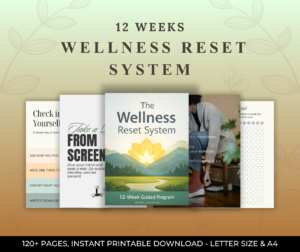
If you would welcome a guided space for reflection, The Wellness Reset System offers a 12-week framework for exploring your wellness habits and making more intentional room for self-care.
Use it alongside the practical changes you choose, at a pace that suits your circumstances.
Visit Digi Book Bazaar to explore The Wellness Reset System and browse the wellness book collection.
Begin With One Easier Morning and One Calmer Evening
Tonight, choose one thing you can prepare for tomorrow.
In the morning, give yourself a brief moment to consider what matters before moving into the day.
Start there. Notice what helps, and build gradually.
Your routine can remain simple. It can change with your circumstances. It can include activities you enjoy.
What would make tomorrow morning—or tonight’s ending—feel a little more manageable?