
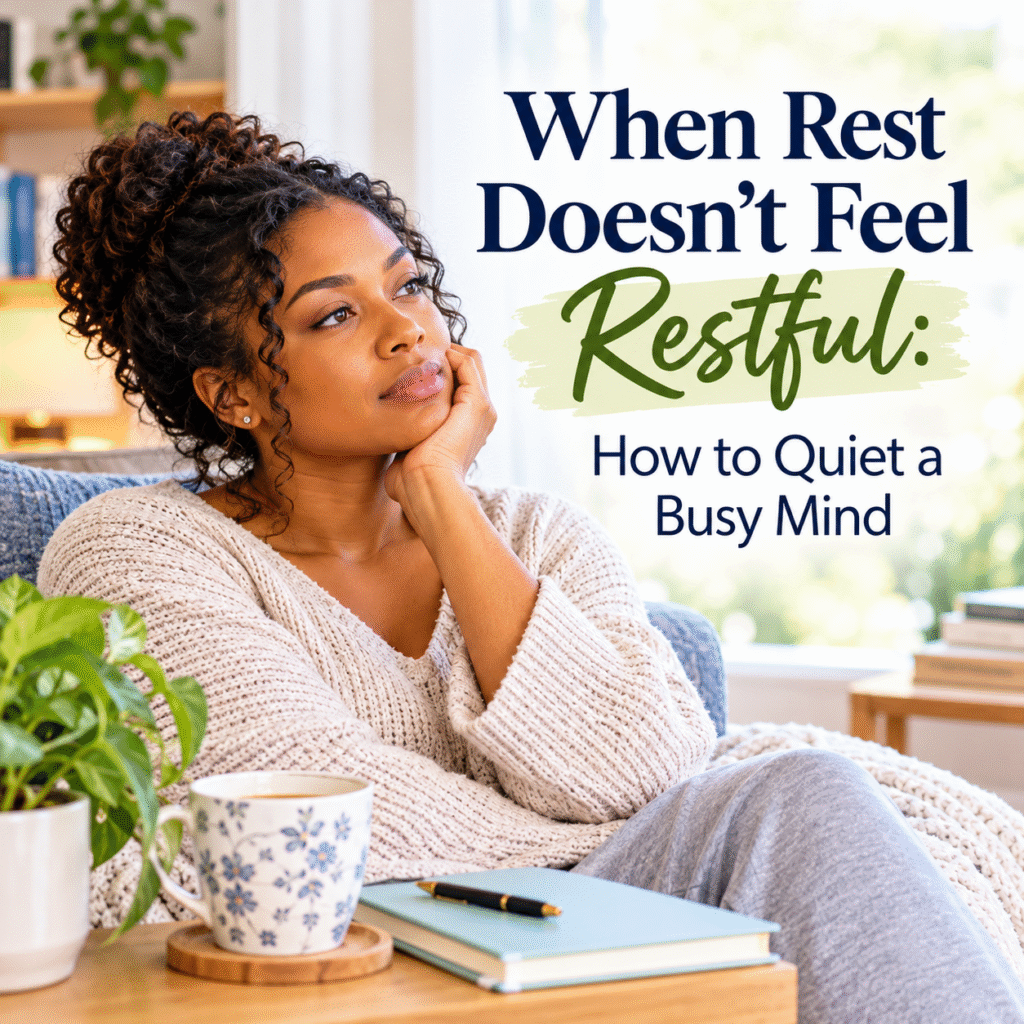
You finally sit down. The day’s work is done, your phone is beside you, and nothing needs your attention this minute. Yet your mind is already reviewing a conversation, planning tomorrow’s errands, and reminding you of something you forgot last Tuesday.
Your body has stopped moving, but you don’t feel rested.
A busy mind can make even a quiet evening feel crowded. The answer is rarely to try harder to relax. It helps to give your thoughts somewhere to go, make room for a gentler pace, and let rest begin before your head reaches the pillow.

Sometimes, even when your body is resting, your mind keeps racing through unfinished tasks, worries, and tomorrow’s responsibilities. The Wellness Reset System is a gentle 12-week workbook designed to help you slow down, clear mental clutter, and build healthier routines without pressure
Why quiet moments can feel so loud
During a full day, you may be too occupied to notice every worry passing through your mind. When the activity ends, those thoughts become easier to hear. An unfinished task suddenly feels urgent. A small uncertainty grows into a long chain of “what ifs.”
Stress can affect sleep, energy, and mood. That doesn’t mean every restless evening is a sign of a serious problem. It does mean that rest may need a little more attention than simply clearing your schedule. Centers for Disease Control and Prevention
The goal is not to empty your mind completely. It is to stop treating every thought as something you must solve right now.
Give tomorrow its own place
If your thoughts keep circling around what you need to do, write them down. Keep the list simple: the appointment to make, the email to send, and the question you need to answer.
Then choose one small next step for anything that truly needs action. “Call the dentist tomorrow” is easier to set aside than a vague thought like “I need to sort everything out.”
You can also make two short columns:
On my mind | What I can do |
I’m worried I’ll forget the appointment. | Put it on my calendar. |
I’m unsure how a conversation will go. | Decide what I want to say tomorrow. |
I can’t control the outcome tonight. | Leave it here for now. |

You may still think about these things later. The list simply reminds you that you have acknowledged them and can return to them when you have more time and energy.
Make a transition into rest
Many of us expect to move straight from messages, chores, or work into calm. A short transition can make that shift feel less abrupt.
You might dim the lights, wash your face, change into comfortable clothes, or read a few pages of a book. Choose something pleasant enough that you’ll actually do it. A ten-minute routine you enjoy is more useful than an elaborate one you dread.
If sleep is your goal, keeping a regular schedule and using the time before bed for quiet activities are established healthy sleep habits. The CDC also recommends turning off electronic devices at least 30 minutes before bedtime. NHLBI, NIH
Notice a thought without following it
When a worry appears, try naming it gently: I’m thinking about tomorrow’s meeting. That small sentence creates a pause between having a thought and getting swept into it.
Next, bring your attention to something you can feel: your feet against the floor, the support of the chair, or the movement of your breathing. When your attention wanders, return without scolding yourself. Wandering is part of the practice.
Mindfulness may help some people manage stress, though it is not a guaranteed fix for insomnia. Think of it as one way to meet a busy moment with a little less struggle. NCCIH
Let rest be more than sleep
Perhaps you are tired but not sleepy. You can still give yourself a break. Sit outside for a few minutes. Listen to music without doing another task at the same time. Stretch gently, or enjoy a cup of caffeine-free tea.
Try asking, “What would feel restorative right now?” The answer may change from day to day. Sometimes you need stillness. Sometimes you need a walk, a conversation, or permission to leave a chore unfinished.
Rest doesn’t have to be earned by completing everything. Most days, everything will not be complete.

When to reach out for support
If racing thoughts, anxiety, or poor sleep regularly interfere with your days, tell a healthcare professional what has been happening. Support is available, and persistent sleep difficulties deserve attention. Cognitive behavioral therapy for insomnia, often called CBT-I, is usually recommended as a first treatment for long-term insomnia. CDC
Tonight, start small. Write down one lingering thought. Put away one source of stimulation. Take a few quiet breaths without asking them to work a miracle.
A restful moment does not require a perfectly silent mind. Sometimes it begins when you decide that, for now, you can let a thought pass without chasing it.
Rest should give you room to recharge, not leave you feeling guilty about everything you haven’t done. If you’re ready to build a gentler relationship with rest and your daily routines, explore The Wellness Reset System.