You spin around quickly to answer someone behind you. You’re carrying groceries and you step off a curb. You grab a mug off the top shelf. Balance helps us get through those everyday moments, but many of us don’t give it much thought until we begin to feel unsteady.
The encouraging news is that balance is something you can practice. A few minutes of gentle movement can help you become more aware of how your body shifts, strengthen the muscles that support you, and make everyday movement feel less uncertain.
Why balance deserves a place in your routine
Good balance involves more than staying upright on one foot. Your eyes, inner ears, muscles, and joints work together to help you sense where you are and respond when you move. Leg strength matters, too. That is why health guidance for older adults recommends balance activities alongside aerobic exercise and muscle strengthening.
You do not have to wait until you feel unsteady to begin. Start at a level that feels manageable, keep a sturdy support within reach, and allow yourself to improve gradually.

Five simple exercises to try
Set yourself up safely first: Practice on a clear, level floor while wearing supportive shoes. Stand beside a kitchen counter or another stable surface you can hold. Avoid using a chair that might slide.
1. Rise from a chair
Sit toward the front of a sturdy chair with your feet flat on the floor, about hip width apart. Lean forward slightly, press through your feet, and stand. Lower yourself back down slowly.
Try five repetitions. Use the chair arms if you need them. This movement strengthens your legs and practices a motion you use throughout the day. Standing from a seated position is also one example the CDC gives of a balance activity.
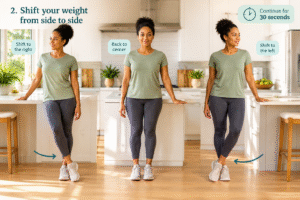
2. Shift your weight from side to side
Stand with your feet comfortably apart and one hand resting on the counter. Slowly shift more of your weight onto your right foot, then return to the center. Repeat on the left.
Continue for 30 seconds, moving at a comfortable pace. Notice how your body adjusts without leaning far or rushing. This is a gentle starting point if standing on one leg feels too difficult.
3. Stand on one foot
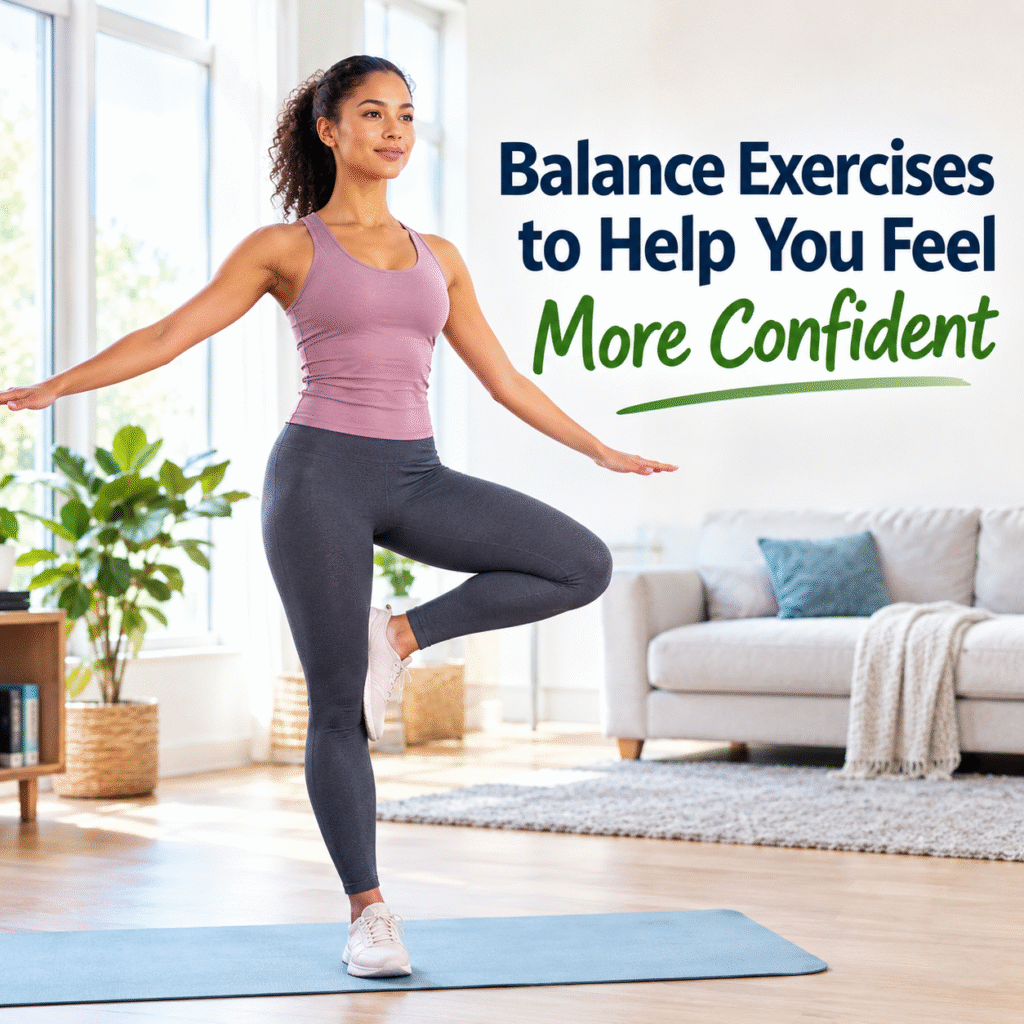
Hold the counter, place your weight on one leg, and lift your other foot just an inch or two off the floor. Keep your gaze on a spot in front of you and breathe normally.
Hold for up to 10 seconds, then switch sides. Even a few seconds counts. As you become steadier, try using a lighter touch on the counter while keeping it within reach. Standing on one foot is a commonly recommended balance activity.
4. Walk heel to toe
Choose a short, uncluttered path beside a counter or wall. Step forward, placing the heel of one foot just in front of the toes of the other. Take five to ten slow steps, then turn carefully and walk back normally.
You can leave a small space between your feet if placing them directly in line feels too challenging. The aim is controlled movement, not a perfect straight line. The heel to toe walk is another balance exercise described by the National Institute on Aging.
5. Try gentle tai chi movements
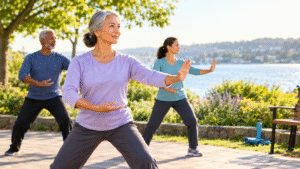
If you enjoy a more flowing activity, consider a beginner tai chi class or a routine led by a qualified instructor. Tai chi combines slow shifts in weight with controlled movement. The CDC identifies it as an example of exercise that can strengthen the legs and improve balance.
Make practice part of everyday life
You do not need a long workout to get started. Choose two or three of these movements and practice for a few minutes on most days. Keep the counter close, move slowly, and pay attention to what feels comfortable. As your confidence grows, you can add a few repetitions or hold a position a little longer.
Progress may show up in small ways: standing from a chair more smoothly, feeling steadier as you turn, or approaching a walk with less hesitation. Those changes are worth noticing.
If you have fallen recently, frequently feel dizzy, or have new trouble walking, speak with a health care professional before trying standing balance exercises on your own. They can help identify possible causes and suggest exercises suited to you. Stop an exercise if you feel faint, have pain, or feel at risk of falling. The CDC also recommends discussing fall risk and medicines that may cause dizziness or sleepiness with a clinician.
Balance does not have to mean standing perfectly still. It means having the strength and awareness to meet everyday movement with a little more confidence—one steady step at a time.